As communities decide how best to spend limited public dollars, the question is no longer whether libraries are valuable. The question has moved to whether building and maintaining physical libraries is the most equitable and cost‑effective way to deliver information access in the digital age. This blog argues that while libraries remain important community hubs, direct investment in free home internet access and personal computing devices are a better solution for modern societies. This is especially important for low‑income, rural, and mobility‑constrained individuals to deliver greater reach, safety, and scalability per dollar spent.
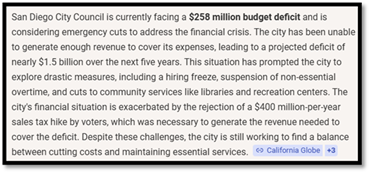
A hybrid model that preserves libraries while expanding digital-first access offers the strongest return on public investment, particularly where transportation, safety, and geography limit who can realistically use physical spaces. This is also crucial when the land and buildings where libraries reside can be sold to create much needed revenue for cities like San Diego, CA that are near bankruptcy.
Why Libraries Were Created Centuries Ago
Public libraries were created to solve a set of very real constraints that defined most of human history.
First: Information was scarce and expensive. Books were difficult to produce, costly to buy, and physically fragile to only have one for public use was fair within a town. For most people, owning a personal library was impossible and libraries emerged as a way to pool resources. This allowed communities to share access to knowledge that no individual household could reasonably afford.
Second: Literacy and formal education were limited to those who were privileged enough to pursue it. Libraries served as extensions of schools and universities, providing supervised environments where people could learn, read, and study with guidance from trained staff. They were designed as structured, respectable spaces that reinforced norms of scholarship and civic participation.
Third: There was no alternative distribution mechanism for information like radio, TV, internet, or magazines when libraries were invented. Before those now legacy media were ubiquitous and subsequently the internet, physical proximity was the only way to access books, newspapers, archives, and reference materials.
Fourth: More recently, libraries played a critical democratizing role as they reduced class‑based access gaps by giving people without wealth. Access to the same books and information to all people of any means was available within libraries. In an era where knowledge was directly translated into opportunity, this mattered profoundly for those who decided to search out information.
Why Those Original Reasons No Longer Apply in a Digital Society
The conditions that made physical libraries essential no longer exist and public policy has not fully caught up with that reality.
First: Information today is abundant, cheap to reproduce, and distributed. The marginal cost of delivering information to an additional person with an internet connection is close to zero dollars. Scarcity has shifted from content to connectivity, not buildings.
Second: Physical proximity is no longer required for learning, research, job applications, skill development, or access to services. In fact, requiring people to travel to a specific location to access information now introduces barriers like time, cost, safety, and stigma that did not exist when libraries were initially conceived.
Third: The role of libraries as supervised learning environments has also changed. Modern learning increasingly happens informally, asynchronously, and digitally through videos, interactive platforms, online communities, and adaptive tools. These modes often align better with how people who struggled in traditional academic settings actually learn.
Fourth: Most importantly, the equity equation has flipped from the past. Centralized buildings reduced inequality because alternatives did not exist and yet, today centralized buildings can reinforce inequality by privileging those who have the time, transportation, confidence, and psychological comfort to use them.
Who Libraries Actually Reach and Who They Don’t
An uncomfortable reality (IMHO) is that the people who most need access to learning resources are often the least likely to use libraries. Even when libraries are and have been physically available and close, this group just tends not use them. Academic success and comfort with institutional spaces strongly influences those who walks through library doors in this internet and social media driven world.
Reasoning: Primary
Students and adults who do well in school or who already value informaton, research, and structured learning tend to find ways to succeed regardless of where resources and books are located. They are comfortable asking for help, navigating search tools, using AI, and consuming formal educational environmental structure. For these individuals, libraries are the cherry on top, not the ice cream, not the whipped cream, not the nuts, not the marshmallow topping, and not even the Oreo cookie crumbles… In short, they are not a barrier to them.
Reasoning: Secondary
People who struggle in school often associate libraries with failure, judgment, or exclusion rather than opportunity. For some, libraries feel like extensions of classrooms where they already feel out of place, behind, as they label libraries as “academic.” Social pressure can reinforce this avoidance especially among teenagers and young adults. This comes in to play when entering a library may be perceived as “uncool” or as signal they are weak to others in their social circle. Disengagement, or academic struggle in these cases leads to opting out of library use to preserve their identity and social standing, even when the resources inside could actually be helpful to them.
The Dynamic
This dynamic means that physical libraries disproportionately serve people who are already inclined to seek them out, rather than those who face the greatest educational or economic barriers. The issue is not a lack of intelligence or potential, but a mismatch between how services are delivered and how people who have been marginalized by traditional education systems perceive those spaces.
Digital Access
Direct digital access changes the equation I am noting here. When learning tools, job applications, information, and skill-building resources are available privately, at home, or on a mobile device there is no social cost, no stigma, and no need to cross psychological or cultural barriers to learn. People can engage at their own pace, on their own terms, without fear of being judged or labeled. In this sense, digital access does not merely replicate library services but reaches populations that libraries systematically miss, not because those people don’t need help, but because the format of help matters as much as the help itself.
Concluding My Thoughts
The original mission of libraries was not to preserve buildings it was to maximize access to knowledge. If that same mission can now be achieved more equitably, more privately, more safely, and at greater scale through direct digital access, then clinging to a physical‑first model is not tradition, it is inertia.
This does not mean libraries were a mistake historically. It means they were a solution optimized for constraints that no longer define that old-world. The question for modern societies is not whether libraries were valuable… of course they were. The question is whether continuing to fund them as the primary delivery mechanism for information still represents the best use of public dollars today.