After spending nearly two decades around the consumer electronics industry, from the early days of CRT (cathode ray tube) TVs (televisions) to today’s sleek flat panels, I’ve learned that one of the most misunderstood topics on the sales floor is something deceptively simple: Aspect Ratios.
Customers would often ask the following.
- “Why are there black bars on the screen?”
- “Why doesn’t this movie fill the entire screen?”
- “What does ‘this film been modified to fit your screen’, mean?”
- “Why are movie theaters so wide?”
- “Why are the new TVs so short, my old one was taller?”
The answer almost always came back to the concept of aspect ratios being different. Just like pricing strategies shape perceived value in retail, aspect ratios shape how we see and experience content on the screens that we use daily.
Let’s Break Them Down
4:3: The 4:3 aspect ratio (also called 1.33:1) was the standard for televisions for decades, especially during the CRT era.
For someone who grew up watching TV in the 70s, 80s, and 90s, everything we saw, from sitcoms to the news, was produced in the 4:3 ratio. That’s because early broadcast standards were designed around this nearly square format.
From a retail perspective, this was a time of standardization and simplicity. Much like older electronics that I sold they “just worked,” everything matched the screen size. There was no need for scaling, adapting, stretching, cropping, cutting, or explaining black bars to customers.
That said, as technology evolved, just like I saw firsthand moving from analog to digital, so did our expectations. The industry needed something more immersive.
16:9: Enter 16:9, the modern standard for HDTVs and some movies (1.78:1).
This is the format we see most often today. It is on virtually every flat-screen TV, streaming device, and most video content. It’s wider, more cinematic, and better suited to how we naturally view the world.
When HDTVs started hitting retailers and showrooms, this was a major shift for everyone.
- Sales Reps were trained up, while having dealt with chaos
- Customers were excited, but also confused
Existing content didn’t always match the screen size and shape. Sound familiar? It’s similar to how consumers often chase premium features without fully understanding them, something I’ve seen countless times in retail.
The industry chose 16:9 because it’s a compromise format! It displays older 4:3 content reasonably well and accommodates wider cinematic formats better than anything before it.
How Are They Measured
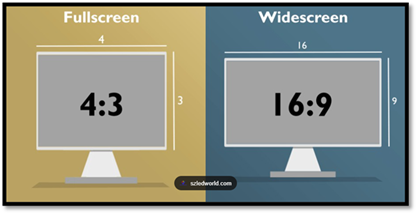
Aspect ratios are actually quite simple, as they’re just a ratio of width to height.
- 4:3 = 4 units wide for every 3 units tall
- 16:9 = 16 units wide for every 9 units tall
It doesn’t matter if you’re talking inches, feet, or pixels as the proportion remains consistent. One just needs to treat these measurements like they are reading a piece of paper. Start from the top left and measure to the right, then from the top to the bottom!
- Left to right = the first number in the ratio
- Top to bottom = the second number in the ratio
My Experience and Exposure
Over the years in retail, I’ve learned that customers often think screen size tells the whole story. But just like margin vs. markup, the deeper understanding lies in how things are measured and presented.
A 32-inch TV in 16:9 doesn’t “feel” the same as an older 32-inch TV set in 4:3 because the usable viewing space is distributed differently. That difference impacts immersion, viewing comfort, and even perceived value.
Why They Are Different
So why didn’t everything just stick with one format?
- The answer comes down to content evolution and artistic intent.
Television historically stayed at 4:3 because of broadcast standards. That said Movies began expanding into wider formats like 1.85:1 and 2.35:1 to create a more cinematic experience by filling one’s field of view better.
HDTV settled on 16:9 as a middle ground
This reminds me a lot of what I’ve seen brands do in retail, creating variations of similar products to serve different audiences and avoid direct competition.
In the same way, aspect ratios exist side-by-side because they serve different purposes:
- TV = practical and standardized
- Film = artistic and immersive
- Streaming = somewhere in between
Modified to Fit Your Screen
Here’s where things get interesting, to me and most, as it is frustrating for customers and users. When content doesn’t match your screen’s aspect ratio, it has to be adjusted. This can happen in several ways:
- Stretching: fills the screen but distorts the image
- Zooming / Cropping: fills the screen but cuts off parts of the image
- Pillar boxing: black bars on the sides (for 4:3 content on 16:9 screens)
During my years on the sales floor, this is where many buying decisions were won or lost. Customers didn’t just want a bigger picture; they wanted the correct representation. It’s a perfect example of something I’ve said before: more expensive or “bigger” doesn’t always mean better if it doesn’t match your needs.
Understanding how content is modified helps you make smarter choices, just like understanding product value in retail.
Letterbox
Letterboxing is when you see black bars at the top and bottom of the screen. This usually happens when a movie with a wider aspect ratio (like 2.35:1) is displayed on a 16:9 TV.
Here’s the important part: Those black bars are not a flaw, they’re preserving the original image.
Filmmakers design scenes to be seen in a specific format. Removing those bars by zooming in actually cuts off parts of the picture on each side.
This is one of those moments where perception and reality don’t align, something I’ve seen repeatedly in retail. Just like a discount can make a product feel like a better deal even when the value hasn’t changed, the absence of black bars can feel “better” even when it’s actually worse for the viewing experience.
Examples
16:9 Example = https://amzn.to/4ep3aJ0
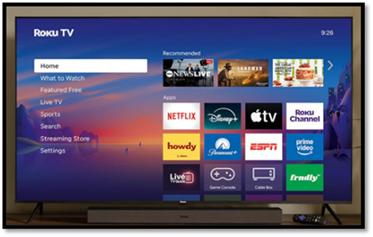
4:3 Example = https://amzn.to/4vRXjD3

Side-by-Side Example = https://szledworld.com/169-vs-43-aspect-ratio.html
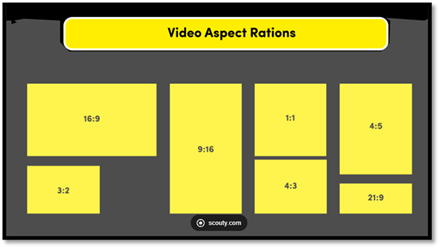
Letterbox Example = https://www.studioremarkable.com/advice/letterbox-explained/552/
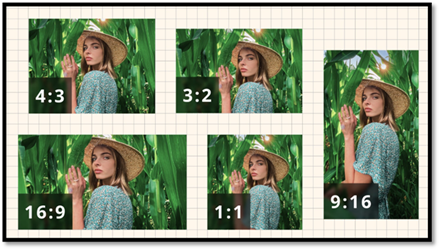
Altered to Fit Your Screen Examples = https://ip-calculator.ru/blog/bez-rubriki/chto-oznachayut-razresheniya-720p-1080p-1440p-2k-4k-i-drugie/

IMAX Example = https://wolfcrow.com/wp-content/uploads/2024/12/65mm-Film-Format-Comparison-Dec-2024-1536×864.jpg

Final Thoughts
Aspect ratios are one of those behind-the-scenes details that make a huge difference in how we experience technology. From my early days in consumer electronics to today, I’ve seen formats evolve, screens get bigger, and content become more immersive than ever.
The core lesson hasn’t changed: It’s not just about the product, it’s about how everything works together.
Understanding aspect ratios more clearly means:
- Better picture quality
- Less frustration
- Smarter buying decisions
Just like everything else in retail and technology, the more we understand, the more value we get out of what we buy.