Take a look around most workplaces and you’ll notice a consistent pattern regarding standards.
ID badges, name tags, and logos are almost always placed on the chest, either clipped to clothing, printed on shirts, or hanging from a lanyard.
It’s a long-standing convention, but when we step back and evaluate it from a human-centered and professional standpoint, this raises important questions.
- Is this placement actually aligned with how people interact respectfully and comfortably?
The Design Mismatch We Rarely Talk About
In professional communication, we emphasize:
- Maintaining appropriate eye contact
- Reading facial expressions
- Engaging with people directly and respectfully
At the same time, we place identifying information such as name tags, titles, slogans, logo below eye level.
Here are a few examples of typical placement:
A lanyard badge resting on the chest: [alamy.com]

A corporate logo embroidered on a shirt’s left chest area: [alamy.com]

ID cards worn visibly on the torso for easy recognition and scanning: [info.jobrien.com]

These choices are practical and but they create a subtle social tension as people must briefly look downward to gather information. This is even in situations where maintaining eye-level engagement is considered more appropriate.
Why This Matters (From a Professional and Human Factors Perspective)
This isn’t about intention; it’s about interaction design.
From a workplace communication standpoint:
- Humans naturally focus on faces when speaking and listening
- Eye contact supports mutual understanding and trust
- Repeated downward glances can be misinterpreted, even when functional
Well-designed systems reduce ambiguity and unnecessary friction. When identifiers are placed away from where attention naturally goes, they require extra effort, or create awkwardness.
A Safer, More Natural Alternative: Move Information Upward
A simple rethinking of placement could improve both clarity and comfort for most. Instead of only using chest-level identifiers, organizations could explore any of the following.
- Head-level identifiers such as branded hats
- Caps with embroidered names or logos
- Bandanas or headgear with visible identification markers
- High-collar or upper-shoulder placement closer to the face
Examples of upward placement concepts:
Branded work hats with logos: [nwcustomapparel.net]
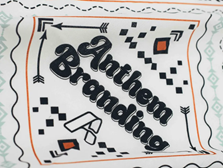
Logo or badge placement on headwear: [headgearhats.com]

Custom bandanas used for branding and identification: [anthembranding.com]
These approaches align identifiers with natural sightlines, reducing the need for downward glances and supporting face-to-face interaction.
The Benefits of Eye-Level Identification
Repositioning identification closer to the face can:
- Support more natural, respectful visual engagement
- Reduce ambiguity in social interactions
- Improve accessibility in fast-paced environments
- Enhance quick recognition during conversations
- Maintain professionalism without requiring extra effort
It also aligns with a broader principle in ergonomics and human-centered design. That is because important information should be placed where users already look and are appropriately able to look.
Why Chest Placement Became the Default
Chest-level placement didn’t happen by accident. It offers the following benefits that were not ignored getting the world to where it is today.
- A stable, easy attachment point
- Consistency for scanning devices and access systems
- Compatibility with a wide variety of clothing styles
In fact, many guides emphasize visibility, consistency, and accessibility as key factors for placement decisions. [badgezoo.com] However, what works mechanically doesn’t always optimize human experience.
Rethinking a Small but Meaningful Detail
This is not about eliminating badges or logos, it’s about refining how they work in real-world interaction. As workplaces evolve toward more inclusive, thoughtful environments, even small design decisions are worth revisiting.
A practical next step could be:
- Offering multiple placement options (chest + headwear)
- Exploring higher placement alternatives in customer-facing roles
- Designing new standards that prioritize both function and social comfort
Final Thought
We spend much of our workday communicating face-to-face, for those that are not 100% remote. That said the information we need to identify each other is often placed somewhere else. By simply moving key identifiers closer to where we naturally and more appropriately look, we achieve the following.
- Make interactions smoother
- Reduce social friction
- Reinforce respectful communication
Sometimes, improving workplace culture doesn’t require a major policy change,
just a small shift in design.