Packing for Travel: Tips to Stay Organized, Save Money & Travel Smart
Packing for a trip can be both stimulating and time-consuming. Whether you’re flying across the country or hopping on a train up the coast, it’s crucial to know what to bring and what to leave behind. Having this information can save you time, stress, and even money—all things we care about.
Beyond simply choosing options based on weather and location, you can streamline your outfits, shoes, accessories, and toiletries to make your trip even better. What you choose to prioritize or leave out has a significant impact on your travel experience and overall satisfaction.
Amateur Tip #1 from the Blogger: Pre-packing
Pre-packing is the unsung hero of stress-free travel. Before you even unzip your suitcase, taking time to plan what you’ll need, and what you won’t, can make all the difference. This stage involves checking the weather forecast, reviewing your itinerary, and considering the activities you’ll be doing. It’s also the perfect time to gather travel documents, confirm reservations, and make a checklist based on your destination. By organizing your essentials ahead of time, you also reduce the risk of forgetting something important and avoid last-minute panic. Pre-packing sets the tone for a smooth, enjoyable trip and helps you pack with intention rather than impulse.
Gathering Information for the Journey
The most overlooked aspect of packing is understanding the limitations and allowances of your chosen mode of transportation. Different carriers and services have varying rules about how much you can bring, how it must be packed, and what items are considered essential versus optional. These rules can affect not only the size and weight of your luggage but also how you organize your belongings.
For example, some forms of travel may allow multiple bags at no extra cost, while others may charge for anything beyond a small personal item. Then, if you are driving you do not charge to carry your own stuff, but you need to work around space and safety constraints in your vehicle. Knowing these details ahead of time helps you avoid last-minute repacking, unexpected fees, or the frustration of having to leave something behind.
Packing with Intention
Additionally, packing with intention means thinking about accessibility and convenience along with realizing who you might be traveling with. Items you’ll need during your journey such as snacks, device chargers, medications, or travel documents should be easy to reach and always kept in the exact same location. See my blog about personal habits for more information on this including putting things in your pockets.
Meanwhile, less urgent items can be stowed away as it’s also wise to consider the length of your trip and the types of activities you’ll be doing. A short business trip might require only a few professional outfits and minimal gear, while a longer vacation could call for a wider variety of clothing, accessories, and personal items.
Ultimately, packing is more than just filling a suitcase. It’s a strategic process that balances preparation with practicality. By taking the time to plan thoughtfully, you can reduce worry, stay organized, and ensure that your journey begins on the correct foot.
Know How you are Traveling
No matter how you’re traveling, it’s fundamental to do your homework on your mode of travel in preparation to start packing. Each mode of transportation comes with its own unique rules, restrictions, and practical considerations. Airline baggage policies, train and bus luggage limits, and even car or motorcycle safety requirements can vary widely. These variations are not just by carrier, but sometimes by route or destination. Always check the latest guidelines from your transportation provider and destination. This extra step helps you avoid last-minute surprises, unnecessary fees, and the frustration of having to repack or leave items behind.
Here is some information to help ensure your readiness:
- International Airline: Packing is limited by weight, size, and security regulations, with checked and carry-on baggage subject to governmental policies and customs restrictions.
- Domestic Airline: Like international flights limited by weight, size, and security regulations, slightly more lenient, with fewer customs restrictions.
- Regional Airline: The most restrictive baggage limits due to smaller aircraft, often allowing only compact carry-ons.
- Train or Bus: Offers relatively more flexibility in baggage size and weight, but space is still limited and as a passenger you must manage your own luggage.
- Personal (or Rental) Car: If you’re driving, there’s no extra charge to carry your own belongings, but you’ll need to work around space and safety constraints in your vehicle. Be aware that blocking your mirrors can be both dangerous and illegal.
- Van or Truck: Provides ample space for large or bulky items, making it ideal for transporting gear that may be heavy or excellent for long-term travel loads.
- Motorcycle: Exceptionally limited storage space, requiring compact, lightweight, and weatherproof packing solutions.
- Motorhome (Truck & Trailer): Offers the most generous packing capacity, allowing for household-level storage, but weight distribution and road safety must still be considered.
Determine What You Need to Pack
Packing smart starts with knowing your trip. Before you even unzip your suitcase, take a moment to assess the key factors that will shape your packing list. This intentional approach helps you avoid overpacking, under-packing, and those dreaded “I forgot…” moments.
Know Your Destination
- Weather: Check the forecast for your destination. Will it be hot, cold, rainy, or dry? This determines your clothing layers and accessories.
- Culture & Dress Code: Are there any cultural norms or expectations of dress? For example, some places may require modest attire or discourage certain styles.
- Activities: Are you hiking, attending meetings, lounging on the beach, or exploring museums? Pack for the specific experiences you plan to have.
Trip Duration
- Short Trips (1–3 days): Stick to essentials. One pair of shoes, a few outfits, and travel-sized toiletries usually suffice.
- Medium Trips (4–7 days): Consider mix-and-match clothing to reduce bulk. You may need more tech gear or entertainment options.
- Long Trips (8+ days): Think about laundry options. Packing fewer items and washing as you go can save space and weight.
Who You’re Traveling With
- Solo Travel: You’re in full control, so pack what suits your needs.
- With a Partner: Coordinate shared items (e.g., toiletries, chargers) to avoid duplicates.
- As a Group: Consider group activities and shared responsibilities as you might be the one bringing the first-aid kit or snacks.
Your Personal Preferences
- Do you prefer comfort over style, or vice versa?
- Are you someone who needs backup options “just in case”?
- Do you have health needs or routines that require specific items?
Selecting your Baggage or Luggage
When it comes to travel, choosing the right baggage is more than just a matter of style or fashion. The selection is a strategic set of decisions that will greatly impact your travel convenience, mobility, and compliance with rules and regulations. From compact backpacks to large rolling suitcases, each sort of bag serves a different purpose. This comes into play depending on the mode of travel and duration of the trip.
Options for Packing
- Backpack – Versatile and hands-free, ideal for day trips or a carry-on
- Purse or Fanny Pack – Small personal item, compact and secure, often used for essentials and allowed on most transport modes
- Briefcase or Messenger Bag – Professional-style bag, often used for business travel and for laptops or documents
- Small Roller (Carry-On Suitcase) – Wheeled and compact, fits in overhead bins with a typical 25 lbs limit
- Large Roller (Checked Suitcase) – Wheeled and spacious, typically checked in with typical 50 lbs limits
- Duffel Bag – Soft-sided and flexible, good for stuffing into tight spaces with limits on weight based on carry-on or checked
- Tote Bag – Open-top bag, often used as a personal item or things purchased at a duty-free shop
- Garment Bag – Designed to carry suits or dresses without wrinkling
- Hard-Shell Suitcase (old school) – Durable and protective, ideal for fragile items, yet smaller than many large rollers
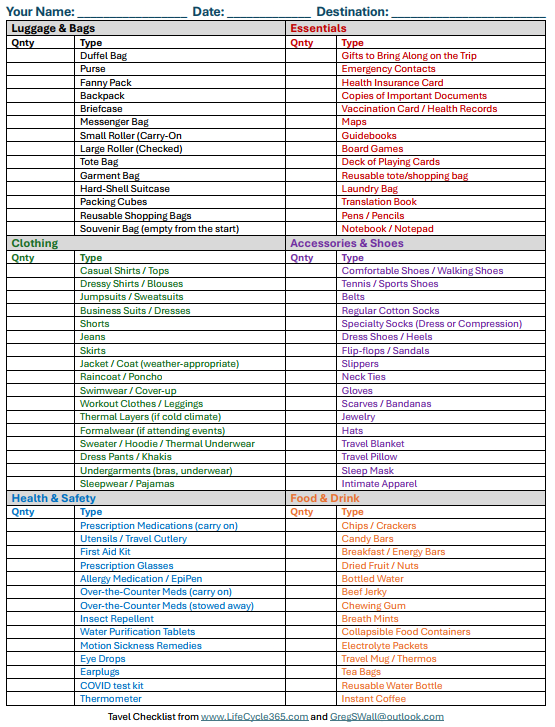
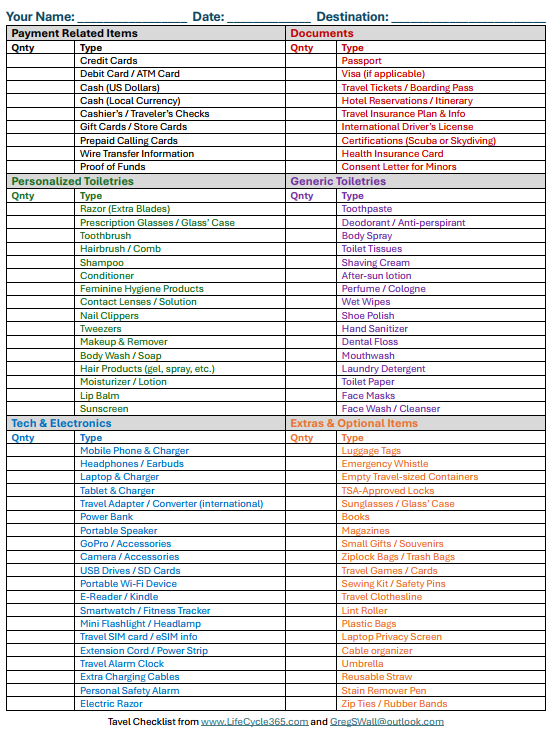
Amateur Tip #1 from the Blogger: Use my Custom Packing List
This ensures you pack with purpose and covers all the essentials you might need. To make your packing process even smoother, download and print the attached PDF checklist. This physical checklist is designed to help you stay organized and visually track your progress as you pack:
- Before you start packing: In the space to the left of each item, write a number (in black ink) for how many of each item you’ll need for your trip.
- As you pack: Mark each number with a red X once that item is packed in your luggage. This helps you quickly see what’s already packed and what’s left to pack.
- If you’re missing something: Use a yellow highlighter to mark any item on the list you need to purchase or find before you pack and leave.
- Final check: Every line should have a red X before you consider your packing complete!
This method keeps your packing visual, interactive, and foolproof so you have no more forgotten essentials or last-minute scrambles.
Amateur Tip #2 from the Blogger: Smart Packing Strategies for a Smoother Trip
A few of my smart strategies can transform your suitcase from chaotic to perfectly organized, making unpacking and repacking a breeze.
Use Packing Cubes
These are game changers for organizing clothes by category or outfit. They keep everything compact and easy to find, especially when you’re hopping between destinations. My favorite thing about them is that you can load/unload a bunch of items at the same time without messing up the organization within the cube.
Bring a Plastic Bag for Dirty Clothes
A simple plastic or reusable laundry bag helps separate worn items from clean ones, keeping your suitcase fresh and odor-free. This is also crucial if you expect wet items from either rain or swimming.
Separate Shoes and Belts
Shoes can carry dirt and odors, so pack them in a separate cube or compartment. Belts can be rolled and tucked alongside them to save space and prevent tangling.
Keep Socks Together
Fold one sock over the other, by rolling one into the other, to keep pairs from getting lost in the shuffle. It’s a small trick that saves time and frustration.
Roll and Pack Vertically
Roll shirts and pants tightly into a ‘tube’, then stand them up vertically in your suitcase. This method prevents stacking, so you can pull items out quickly. just like taking a cigarette from a box, without disturbing the rest of your clothes.
Amateur Tip #3 from the Blogger: Making Space for Souvenirs and New Finds
When planning your packing, it’s smart to think ahead about how you’ll bring home souvenirs, gifts, or unexpected purchases. There are three practical ways to ensure you have space in your luggage for anything you pick up along the way:
- Bring an extra, empty bag (like a foldable tote or duffle) that you can fill as needed.
- Leave space in your main luggage from the start by not packing your bag to full capacity.
- If you’re bringing gifts to give away during your trip, remember that once those gifts are delivered, the space they occupied will be available for new items you acquire.
By planning for extra space in one (or more) of these ways, you’ll avoid the stress of overstuffed bags and extra baggage fees on your return. This approach keeps your packing flexible and your travels more enjoyable!
Amateur Tip #4 from the Blogger: Digitally Back Up Your Important Documents
Before you leave for your trip, take a few minutes to create digital copies of all your essential documents. These digital backups could include simple photos, screenshots, or even a PDF save in the cloud. This simple step can save you a lot of stress if anything gets lost, stolen, or damaged while you’re traveling.
Use your phone to take clear photos or screenshots of the following:
- Passport (photo page)
- Driver’s license or ID card
- Travel visas (if applicable)
- Boarding passes or train/bus tickets
- Hotel reservations and confirmation emails
- Travel insurance policy and emergency contact numbers
- Vaccination card or health records
- Credit and debit cards (front and back)
- Emergency contacts and medical information
- Itinerary and tour bookings
- International driver’s permit (if needed)
- Any special certifications (e.g., scuba, skydiving, etc.)
Note: A photo of your luggage and travel companions can help with identification if your bag is lost or if you need to describe someone in your group during an emergency.
Important: Don’t just store these on your phone, because you could be without it at the same time. Upload them to a secure cloud service such as OneDrive, Google Drive, or Dropbox for safe keeping. This ensures your documents are accessible even if your phone may have been lost, broken, or stolen. You can also email copies to yourself or a trusted contact for added peace of mind.
Having digital access to your documents can help you prove your identity, rebook travel, or get assistance more quickly in case of an emergency. It’s a small step that offers big protection.
Amateur Tip #5 from the Blogger: Security & Safety on the Go
Packing smart isn’t just about what you bring and how you pack it, it’s also about how you protect and secure it. Whether you’re traveling alone, with a partner, or in a group, keeping your belongings secure can prevent headaches and frustrations along with helping you feel more confident throughout your journey.
Here are a few simple but effective safety tips to keep in mind:
- Locks: Use TSA-approved locks on your checked luggage to deter tampering while still complying with airport security.
- Valuables: Keep valuables and important documents (passport, ID, credit cards) in your carry-on or a secure travel pouch and never in your checked bags. Consider a money belt or anti-theft backpack if you’re traveling in areas known for petty theft.
- Tags: Avoid displaying your home address on luggage tags. Instead, use a phone number or email address for contact.
- Awareness: Be aware of your surroundings in crowded areas like airports, train stations, and tourist spots. Pickpocketing can happen quickly.
A little preparation goes a long way to keeping your trip smooth and stress-free. Security mindfulness is part of smart packing and should not be overlooked!
Amateur Tip #6 from the Blogger: Weigh Your Luggage Before You Leave
Avoid surprise fees at the airport by checking your bag’s weight before you leave home. If you don’t have a luggage scale, simply weigh yourself on a bathroom scale, then pick up your packed bag and weigh yourself again. Subtract your weight from the combined total to get your bag’s weight. This quick trick helps you stay within airline limits and saves you time and money at check-in!
Why this Matters?
This matters because effective packing directly influences the quality of your travel experience. When you pack with intention, considering transportation constraints, destination needs, and personal habits, you reduce stress, avoid unnecessary expenses, and ensure you’re prepared for the journey ahead. A well-thought-out packing strategy helps you stay organized, adapt to unexpected changes, and focus more on enjoying your trip rather than dealing with logistical headaches. In short, smart packing isn’t just about convenience, it’s about empowering yourself to travel confidently and comfortably.
Packing smart isn’t just about fitting everything into your suitcase as much as it’s about avoiding surprise fees, staying comfortable, and being prepared. Whether you’re flying with Southwest, Spirit, or riding Amtrak, knowing the rules helps you travel with confidence.
Links for this Blog